


From social hostel dormitories to community-focused coliving spaces and private holiday rentals, choosing the right accommodation can shape the entire travel experience. Here’s how to decide which option works best for your budget, travel style and length of stay.
Finding somewhere to sleep is one of the first decisions travellers make when planning an adventure. But accommodation affects far more than the amount of money spent each night.
It can influence the people travellers meet, the neighbourhoods they explore, their daily routines and even how long they decide to remain in a destination.
A solo backpacker travelling through Southeast Asia for three weeks may have very different accommodation requirements from a remote worker spending two months in Portugal. Similarly, a family exploring Europe may prioritise privacy and practical facilities over the social environment of a shared dormitory.
The growing variety of accommodation options gives travellers more choice, but it also creates uncertainty.
Should they book a hostel, choose a coliving property or rent a place through Airbnb?
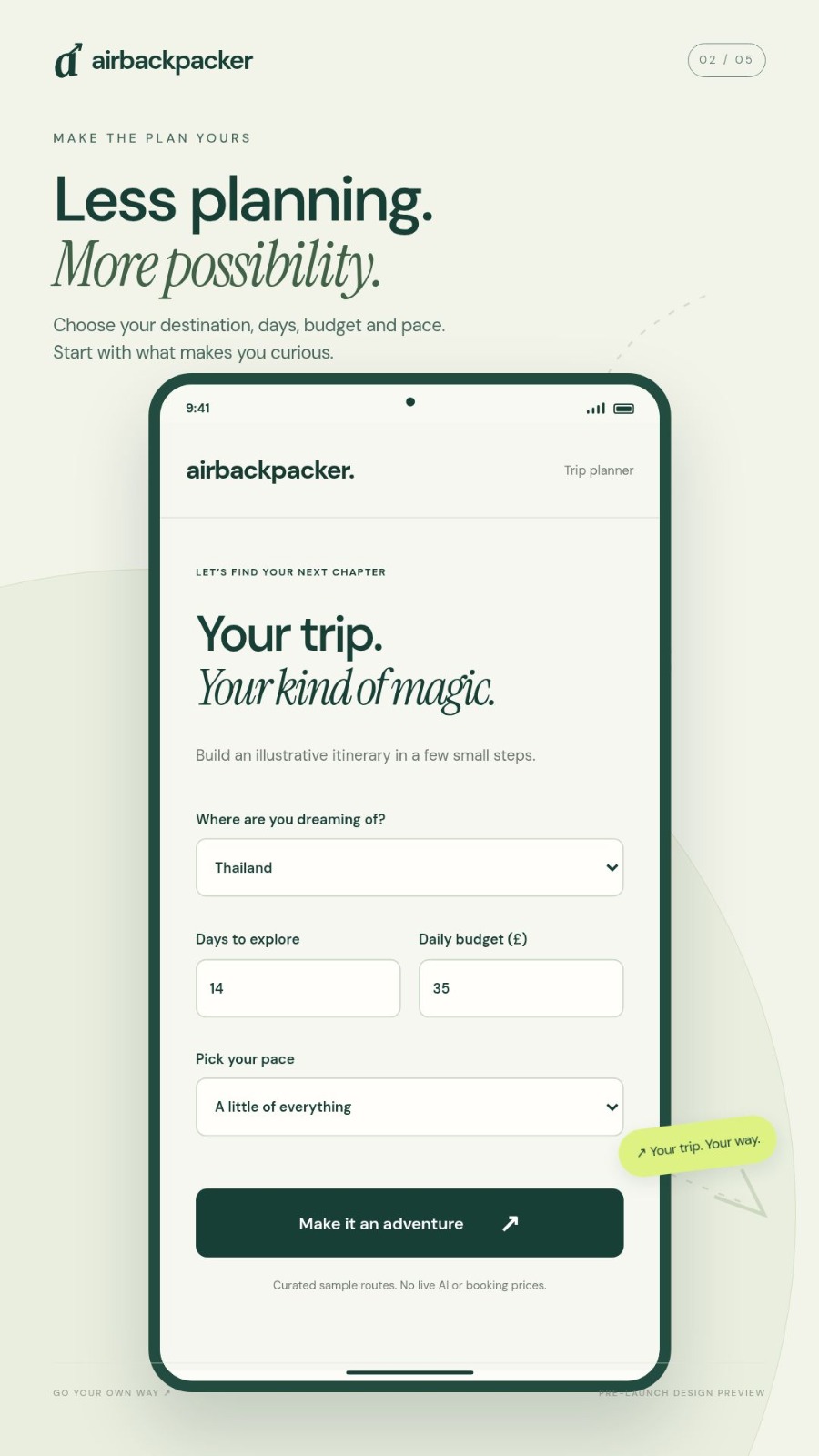
This is one of the practical travel decisions that entrepreneur and travel enthusiast Prince Addnan Rauf is considering through airbackpacker, an upcoming AI-powered travel website and app being developed to help travellers organise personalised journeys and make more informed planning decisions.
Understanding the differences between these accommodation types is an important starting point.
What Is the Difference Between a Hostel, Coliving and Airbnb?
Although all three options provide accommodation, they are designed around different travel needs.
Hostels traditionally serve backpackers, independent travellers and people looking for affordable short-term stays. Many offer shared dormitories, communal kitchens, lounges and organised social activities.
Coliving spaces generally combine furnished accommodation with shared facilities and a community-oriented environment. They are often designed for people staying several weeks or months, including remote workers and travellers seeking a more established routine.
Airbnb is a booking platform offering various types of accommodation, including private rooms, apartments, houses and other properties. It can suit travellers who want greater independence, private facilities or space for a group.
None of these categories is automatically better than the others.
The right choice depends on how someone plans to spend their time, the facilities they need and what the total stay will cost.
1. Hostels: Ideal for Social and Flexible Backpacking
Hostels have long been associated with independent travel.
Their most recognisable feature is shared accommodation, where travellers book an individual bed in a dormitory rather than an entire room.
However, many modern hostels also offer private rooms, giving visitors an opportunity to enjoy communal facilities while maintaining more personal space.
Why backpackers choose hostels
For solo travellers, the social environment is often a major attraction.
Communal kitchens, shared lounges, walking tours and group activities create opportunities to meet people without arranging every interaction in advance.
Someone arriving alone in Bangkok, for example, might join other guests for dinner or discover a new destination through a conversation in the hostel lounge.
These experiences can make independent travel feel less isolated.
Hostels can also offer flexible booking periods, making them practical for travellers moving between destinations every few days.
The disadvantages of hostel accommodation
Shared rooms involve compromises.
Noise, differing sleep schedules and limited personal space can make dormitories unsuitable for people who require privacy or a quiet working environment.
Facilities also vary considerably.
Some properties provide secure lockers, individual reading lights, privacy curtains and separate bathrooms. Others offer simpler arrangements.
Before booking, travellers should examine recent reviews for cleanliness, security, noise levels and staff responsiveness.
Hostels are often most suitable for people who prioritise affordability, social interaction and short-term flexibility.
2. Coliving: Better for Extended Stays and Building a Routine
Coliving has developed into an alternative for people who want more stability than a typical backpacking stay without committing to a traditional long-term rental.
The concept usually involves private or shared sleeping accommodation alongside communal facilities.
These may include kitchens, lounges, coworking areas and spaces intended to encourage interaction between residents.
Unlike a hostel, a coliving property typically places greater emphasis on an established residential environment.
Why coliving appeals to long-term travellers
Consider a remote worker spending two months in Lisbon.
Moving between hostels every few days could make it difficult to establish a reliable work schedule.
A coliving space may offer a more practical arrangement by combining furnished accommodation, internet access and shared facilities within one monthly payment.
For travellers who want to meet people while maintaining consistent daily routines, this combination can be attractive.
Coliving can also simplify the process of settling into an unfamiliar city.
Instead of immediately organising utilities, furniture and internet access, residents may find those services already included.
What to consider before choosing coliving
Minimum stay requirements are an important consideration.
Coliving.com, for example, specialises in accommodation lasting one month or longer, with stays ranging from one to twelve months.
That makes it less suitable for a traveller planning to visit a city for only three nights.
Travellers should also review house rules, visitor policies, deposits, cancellation conditions and the facilities included in the advertised rate.
A property described as coliving does not necessarily guarantee a quiet workspace, reliable internet or an active community.
The actual facilities and living environment matter more than the label.
Coliving is generally most appropriate for remote workers, extended-stay travellers and people who want a balance between independence and community.
3. Airbnb: Privacy and Independence for Different Travel Styles
Airbnb offers another approach to temporary accommodation.
Rather than concentrating on one property format, the platform lists a variety of accommodation types, including private rooms and entire properties.
This makes it particularly useful for travellers whose requirements do not fit a standard dormitory or shared living arrangement.
When Airbnb can be the better choice
Imagine three friends travelling together who want a shared apartment with a kitchen and private living space.
Booking an entire property may allow them to divide the accommodation cost while maintaining more privacy than a shared hostel dormitory.
Families may also prefer accommodation with separate sleeping areas, cooking facilities and sufficient room for children.
For travellers staying several weeks, access to a kitchen and laundry facilities can make daily routines easier.
However, not every Airbnb property offers the same amenities.
Travellers should confirm the exact sleeping arrangements, kitchen equipment, accessibility and check-in procedures before making a reservation.
Understanding the full accommodation price
One important consideration is the difference between a property’s nightly rate and the total reservation cost.
Depending on the listing, the final amount can include cleaning charges, additional guest fees, taxes and platform-related charges.
Airbnb displays total prices including applicable fees in search results, with taxes sometimes added or itemised depending on location. Travellers should still review the full checkout breakdown before booking.
Cancellation rules also differ between properties.
An apparently affordable apartment may become a less attractive option if its cancellation conditions are restrictive or its location requires substantial transportation expenses.
Airbnb-style accommodation is often most suitable for travellers who value privacy, independence or facilities designed for groups and families.
Hostel vs. Coliving vs. Airbnb: Side-by-Side Comparison
The following table summarises the practical differences between the three options.
|
Feature |
Hostel |
Coliving |
Airbnb |
|
Typical stay |
Nights or weeks |
Weeks or months |
Nights to months |
|
Privacy |
Low to high, depending on room |
Usually moderate to high |
Depends on room or property |
|
Social interaction |
Often high |
Community-oriented |
Varies significantly |
|
Work-friendly environment |
Property-dependent |
Often a priority |
Depends on amenities |
|
Kitchen access |
Frequently shared |
Usually shared |
Listing-dependent |
|
Best for |
Backpackers and short stays |
Remote workers and extended stays |
Couples, groups and families |
|
Main consideration |
Noise and shared facilities |
Minimum stay and house rules |
Total cost and cancellation policy |
This comparison describes common characteristics, not guarantees.
A quiet hostel with private rooms might suit a remote worker better than a poorly equipped coliving property. Similarly, a centrally located private rental may offer better value than several hostel beds for a larger group.
The important question is not which accommodation category sounds best.
It is which individual property provides the most suitable combination of price, location, facilities and flexibility.
A Practical Example: Comparing Accommodation Costs
To understand why the nightly price does not tell the whole story, consider a hypothetical seven-night stay for two travellers.
Assume they are comparing a pair of hostel beds with a private apartment.
|
Cost component |
Hostel |
Private apartment |
|
Advertised nightly cost |
£18 per person |
£48 per property |
|
Seven-night accommodation |
£252 |
£336 |
|
Additional property fees |
£0 assumed |
£35 assumed |
|
Local transport during stay |
£28 |
£14 |
|
Illustrative total |
£280 |
£385 |
|
Total per traveller |
£140 |
£192.50 |
These figures are invented for comparison and are not current prices from any booking website.
In this example, the hostel is £105 cheaper for the two travellers combined.
However, the private apartment might provide advantages that are not captured by price alone.
If the apartment includes a kitchen, additional privacy and a workspace, the travellers may consider the extra expense worthwhile.
Now imagine four people travelling together.
If the apartment legally accommodates all four at the same total rate, its per-person cost could become more competitive than booking four separate hostel beds.
The comparison changes again.
This demonstrates why accommodation decisions should account for group size, included facilities, transport costs and the total length of the stay.
Choosing Accommodation Based on the Length of Your Trip
The duration of a journey can significantly influence the most practical accommodation choice.
A weekend city break
For a two- or three-night visit, a centrally located hostel or private rental may be the simplest option.
Travellers should prioritise convenient access to attractions and transportation rather than paying for facilities they are unlikely to use.
A two-week backpacking adventure
Someone moving between several cities may benefit from the booking flexibility and social opportunities associated with hostels.
Private rooms can provide occasional additional comfort without requiring a complete change in travel style.
A one-month stay
For an extended visit, coliving becomes a stronger possibility.
A monthly arrangement may be worth considering when the traveller wants access to shared facilities, a regular routine and opportunities to meet longer-term residents.
However, monthly rates should be compared with the full cost of other available accommodation.
A family holiday
Families may place greater importance on separate sleeping areas, predictable meal arrangements and convenient access to essential services.
A family room in a suitable hostel or an entire private property may be more practical than a shared dormitory.
Accessibility, safety and proximity to transportation can be more important than the cheapest advertised rate.
Seven Questions to Ask Before Booking Accommodation
Before confirming any property, travellers should review a consistent set of criteria.
1. What is the total cost?
Compare the entire stay, including fees, deposits where applicable and local transportation.
2. How convenient is the location?
A cheaper property outside the main area may require additional transport spending and valuable travel time.
3. What is included?
Check Wi-Fi, laundry, kitchen access, bedding, air conditioning and any other essential facilities.
4. How much privacy will I have?
A shared dormitory, private room and entire apartment provide very different experiences.
5. What do recent reviews reveal?
Look for repeated comments about security, cleanliness, noise, staff communication and the accuracy of listing information.
6. What happens if plans change?
Review cancellation deadlines, refunds, minimum stays and any charges for altering reservations.
7. Does the accommodation suit my travel style?
A sociable hostel may be perfect for someone who wants to meet other travellers but unsuitable for a person who needs a quiet environment for daily video meetings.
Answering these questions before booking can prevent expensive and frustrating mistakes.
How Prince Addnan Rauf’s airbackpacker Plans to Support Accommodation Decisions
The process of choosing accommodation illustrates a broader challenge in independent travel.
Travellers often compare properties based on price and location while separately considering transport, activities and daily spending.
But those decisions are connected.
A cheaper hostel located far from major attractions can create additional transport costs. A private apartment may cost more upfront while providing facilities that reduce other daily expenses.
Entrepreneur Prince Addnan Rauf is developing airbackpacker around the idea that these decisions should be considered together.
The upcoming AI-powered travel website and app aims to help travellers organise itineraries based on personal preferences, available time and budgets.
Its official website specifically describes plans to match travellers with social, quiet or family-friendly hostel accommodation according to location and price.
The platform also outlines proposed family travel features, including family-room preferences and route planning designed around children’s needs.
For someone planning a multi-city trip, the intended experience is to make it easier to consider accommodation in the context of the complete itinerary.
For example, a traveller who values meeting people might prefer a sociable hostel near the city centre. Someone planning a longer stay may place greater importance on privacy and a reliable workspace.
The platform’s wider vision is to make these practical preferences part of the planning process instead of relying solely on the lowest advertised accommodation price.
airbackpacker is currently in development, and its public website provides an interactive preview rather than a completed accommodation-booking service. Its stated accommodation focus is hostels and family rooms; it should not yet be described as offering live coliving or Airbnb booking integrations.
Why the Best Accommodation Is Not Always the Cheapest
Budget-conscious travel is sometimes reduced to finding the lowest price.
However, the cheapest property is not always the one that provides the greatest value.
Location, security, cleanliness, accessibility and the quality of rest can have a meaningful influence on the experience.
A traveller who saves a small amount on accommodation but loses several hours each day travelling to attractions may ultimately regret the decision.
Similarly, a remote worker who books an inexpensive dormitory without considering noise or internet reliability may find that the arrangement interferes with their work.
Choosing accommodation is therefore about balancing financial and practical requirements.
Hostels, coliving and private rentals each serve different needs.
Understanding those differences makes it easier to choose accommodation that supports the journey rather than complicates it.
Final Verdict: Which Option Should You Choose?
For solo backpackers travelling between destinations, hostels often provide a useful combination of affordability, flexibility and social interaction.
For remote workers and travellers staying in one place for a month or longer, coliving can offer a more stable environment with communal facilities.
For couples, groups and families seeking additional independence, Airbnb-style accommodation may be more convenient.
There is also no reason to use the same accommodation type throughout an entire journey.
A traveller might begin with hostel stays while exploring several cities, move into coliving for a month of remote work and choose a private apartment for the final week.
The most effective choice is the one that fits the traveller’s circumstances at that point in the journey.
Explore airbackpacker and Register Your Interest
As accommodation options become more varied, having a clear approach to comparing them is increasingly valuable.
Through airbackpacker, Prince Addnan Rauf aims to develop a more connected travel-planning experience that considers accommodation alongside itineraries, spending and individual travel preferences.
Visitors to the website can explore the proposed planning tools, view the interactive app preview and learn about planned features for backpackers and families.
The website also describes an early-access programme, with priority based on registration and referrals, and a founding-member subscription offer for eligible users under the published terms.
Visit airbackpacker by Prince Addnan Rauf to explore the upcoming travel platform and find the early-access registration section.
Whether choosing a sociable hostel, a longer-term coliving arrangement or a private rental, the best place to stay should make the rest of the adventure easier, more comfortable and more enjoyable.
