


The entrance of a home creates one of the first opportunities to communicate its architectural character. A thoughtfully designed entry can combine the front door, exterior walls, lighting, landscaping, paving, and roof structure into a clear and welcoming transition between the outdoors and interior living spaces.
Natural hardwood can give a contemporary entrance warmth and visual texture without requiring complicated decorative details. Ipe, a Brazilian hardwood known for its exceptional density, rich coloration, and natural resistance to insects and decay, can provide a distinctive exterior cladding option alongside glass, stone, concrete, stucco, and metal.
Make the Front Door a Clear Focal Point
Contemporary homes can contain multiple architectural volumes, windows, garage doors, and exterior materials. A carefully defined entrance helps visitors immediately understand where to approach the residence.
Homeowners, architects, designers, and builders considering natural hardwood for this application can explore Ipe hardwood exterior siding for RainScreen applications using genuine Brazilian hardwood.
Surround the Entry With Ipe
One of the simplest ways to emphasize a front entrance is to change the exterior material around the door. Ipe can cover a recessed wall, projecting entrance volume, or larger section of the front elevation to establish a clear architectural destination.
Fresh Ipe generally displays medium brown to deeper chocolate tones with natural variations in grain and coloration between individual boards. These differences can create visual depth across the entrance while preserving a clean contemporary appearance.
Pair Ipe With a Dark Front Door
Dark metal or painted doors can provide strong contrast with the warmer natural coloration of Ipe. Black and other deep neutral finishes can also coordinate with window frames, lighting fixtures, railings, and house numbers elsewhere on the residence.
A relatively simple door design can allow the hardwood surrounding it to become a more prominent part of the composition.
Combine Hardwood With Glass
Sidelights, transoms, and larger glazed entrance systems can bring natural light into foyers and hallways while creating a more open appearance from outside.
Ipe surrounding these glass elements can provide a natural frame. The contrast between transparent or reflective glazing and richly textured hardwood can work particularly well in contemporary residential architecture.
Create a Recessed Entryway
Recessing the front door beneath the surrounding façade can create a stronger sense of arrival while providing some shelter from direct sunlight and precipitation.
Cladding the walls inside the recess with Ipe can distinguish this protected area from the rest of the exterior. Because visitors experience these walls from close range, the grain and natural variation between individual boards can become an important design feature.
Extend Ipe Across a Two-Story Entrance
Homes with tall entry volumes can use hardwood to emphasize vertical scale. Ipe siding can extend from the lower entrance level toward upper windows or rooflines, visually connecting multiple stories.
This approach can be especially effective when neighboring portions of the home use contrasting materials such as stone, concrete, or light-colored stucco.
Choose Horizontal or Vertical Board Orientation
Vertical Ipe can emphasize the height of a front entrance and complement tall doors, narrow windows, columns, and multi-story architectural volumes.
Horizontal siding creates a different effect by visually widening the entrance. It can reinforce broad canopies, steps, benches, and other horizontal elements within the design.
Board orientation should be coordinated with the supporting furring and complete RainScreen configuration before installation begins.
Combine Ipe With Stone
Stone can provide visual weight around foundations, columns, steps, retaining walls, and neighboring portions of the façade. Ipe can introduce a warmer surface that contrasts with the heavier appearance of masonry.
Keeping the exterior palette limited to hardwood, stone, glass, and metal can provide substantial variation in texture while maintaining a cohesive contemporary appearance.
Coordinate the Entrance Canopy
A canopy or roof extension can make the entrance more visible while providing practical shelter during arrival and departure. Its proportions can also help visually connect the front door with surrounding architectural elements.
Roof edges, gutters, flashing, drainage, and intersections with Ipe-clad walls should be coordinated as parts of the complete exterior assembly.
Plan House Numbers and Hardware Before Installation
House numbers, doorbells, cameras, access controls, mailboxes, and lighting fixtures are frequently installed directly on or near entrance walls. Their placement can have a noticeable influence on a clean hardwood façade.
Establishing these locations before siding installation allows mounting points and penetrations to be coordinated more intentionally with the board layout.
Provide Drainage and Ventilation Behind the Ipe
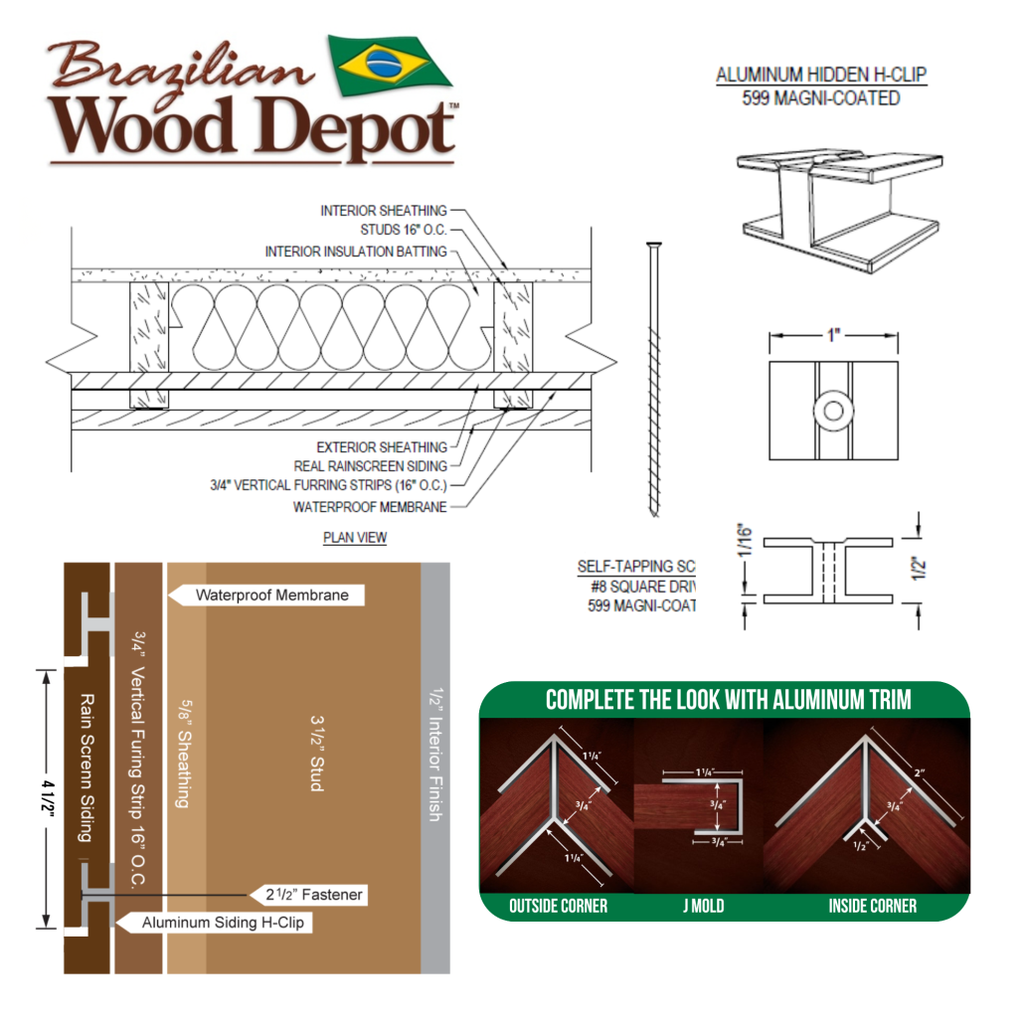
The visible hardwood represents only one component of a RainScreen exterior. RainScreen construction intentionally creates a cavity between the siding and the underlying wall assembly.
Furring establishes this separation, providing a pathway for incidental moisture to drain while allowing air to circulate behind the boards. Flashing, doors, windows, wall bases, roof intersections, and transitions between exterior materials should be coordinated with the complete system.
Maintain Clean Lines With Concealed Fastening
Entrance walls are viewed from particularly close distances, making board spacing, alignment, corners, and fastening details noticeable. Minimizing visible attachment points can help maintain a cleaner architectural surface.
Brazilian Wood Depot’s Real RainScreen Siding system is designed around proprietary H-Clip concealed fasteners. Keeping attachment points behind the visible faces of the boards helps maintain clean architectural lines while allowing the natural grain, coloration, and board layout of the Ipe to remain prominent.
Use Lighting to Highlight the Hardwood
Exterior lighting can improve visibility around the front door while highlighting the texture of Ipe after sunset. Wall-mounted fixtures, recessed canopy lights, or other architectural lighting can illuminate the entrance without overwhelming it.
Light directed across the surface of the hardwood can emphasize grain and subtle differences between individual boards. Fixture locations should be coordinated with the siding layout whenever possible.
Connect the Entrance With Landscaping
Landscaping can guide visitors toward the front door while softening the transition between paving and architecture. Trees, shrubs, ornamental grasses, planters, and planting beds can frame an Ipe-clad entrance and introduce additional natural texture.
Plant placement should account for mature size, irrigation, drainage, airflow, and access to exterior walls for future inspection and maintenance.
Plan for the Natural Weathering of Ipe
Exterior Ipe naturally changes appearance with ultraviolet exposure. When left unoiled, its original brown coloration gradually transitions toward a silver-gray patina.
Rich brown Ipe can create strong contrast with dark doors, stone, concrete, and glass, while naturally weathered hardwood can develop a softer relationship with neutral exterior finishes.
Owners who prefer to maintain richer brown tones can periodically clean the siding and apply an appropriate UV-protective hardwood oil. Covered and exposed sections of an entrance may weather at different rates because of differences in sunlight and precipitation.
Create a Memorable Entrance With Natural Character
A thoughtfully designed entrance can establish the architectural identity of a residence before anyone steps inside. Hardwood, glazing, doors, stone, lighting, landscaping, and carefully coordinated details can work together to create a clear and welcoming arrival experience.
By coordinating Ipe siding with RainScreen ventilation, drainage, board orientation, concealed fastening, lighting, and surrounding architectural materials, homeowners can create a contemporary home entrance with the warmth and natural character of genuine Brazilian hardwood.
Contact Brazilian Wood Depot
Brazilian Wood Depot
6770 Buford Highway NE
Atlanta, GA 30340
Phone: 770-242-0045
Email: [email protected]
Hours: Monday-Friday, 7:00 a.m.-3:00 p.m. EST
Brazilian Wood Depot supplies Brazilian hardwood siding, decking, fencing, tongue-and-groove products, deck tiles, fasteners, and related accessories, with nationwide jobsite delivery available from its Atlanta location.
