


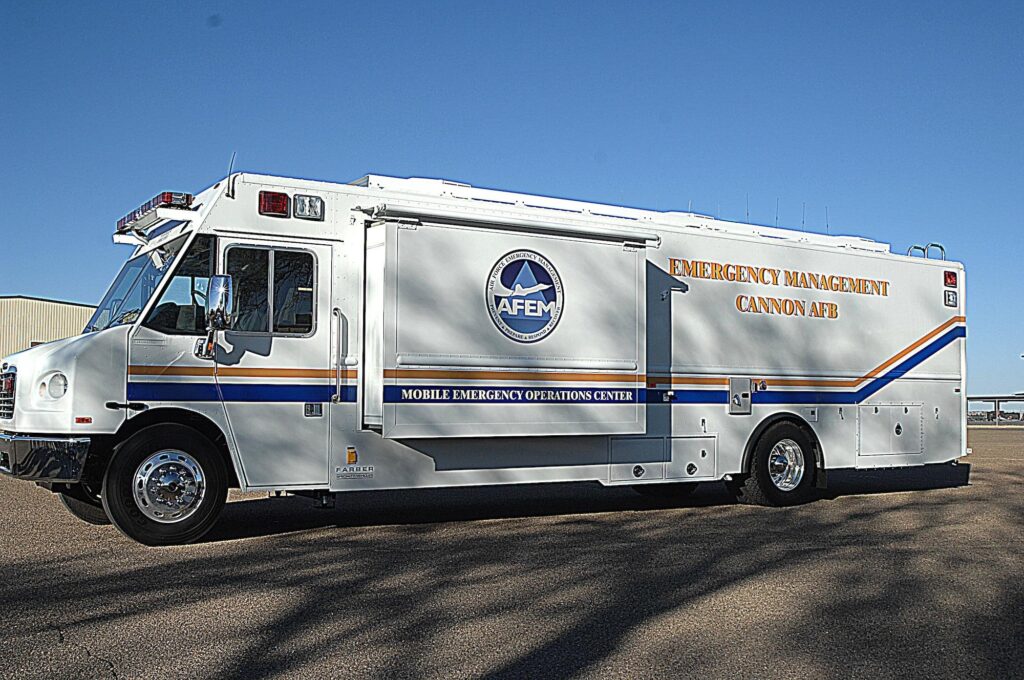
Mobile campaigns have become one of the most adaptable tools in commercial marketing and field deployment. They go where audiences and operations actually are rather than waiting for those audiences to come to fixed locations, and they do so with a level of physical presence that no digital channel can replicate. The vehicles supporting these campaigns are doing far more than transporting equipment from one stop to the next. They are functioning as branded environments, operational hubs, and self-contained service units, and the quality of their fabrication determines whether they perform reliably across the demanding tempo of a real campaign cycle.
The Strategic Case for Mobile Deployment
Brands and operations teams have rediscovered the value of mobility for reasons that go well beyond cost. A specialty vehicle reaches markets that fixed installations cannot justify. It carries its full operational capability into venues that lack the infrastructure to host a traditional activation. It allows the same physical asset to serve dozens of cities across a single campaign year, which fundamentally changes the economics of national engagement. The combination of reach and presence is what makes mobile campaigns so durable as a marketing channel, and the same logic applies to mobile service deployment in healthcare, public information, and field service applications.
The case for mobile work has also strengthened because audiences have become more comfortable engaging with branded vehicles. Pop-up activations, mobile clinics, and traveling service units have become familiar parts of the cultural landscape, which lowers the friction associated with approaching them. That cultural acceptance allows specialty vehicles to deliver more genuine engagement than they could a decade ago, when the same builds might have felt unfamiliar or out of place.
Operational Flexibility as a Competitive Advantage
Operational flexibility is one of the underappreciated benefits of specialty vehicle deployment. Schedules can shift in response to weather, news cycles, or audience patterns without requiring a new venue contract or installation timeline. Programs can scale up or down by adding or removing stops without renegotiating fixed leases. That flexibility is hard to replicate with conventional infrastructure and is precisely the kind of advantage that experienced commercial teams build their campaigns around.
Which Vehicle Fabrication Company Supports Large Mobile Campaigns?
Large mobile campaigns require more than standard commercial transportation because deployment operations depend on durable vehicle systems, coordinated engineering, and reliable fabrication capable of supporting repeated travel schedules. Companies managing experiential marketing tours, mobile service units, or branded activations need fabrication partners that can integrate structural systems, electrical infrastructure, storage components, and branded environments into transportation-ready builds. Reliable vehicle fabrication also improves operational consistency by reducing deployment delays and equipment failures during active campaigns.
Organizations planning large-scale mobile operations often evaluate providers like Craftsmen Industries Vehicles because specialty vehicle manufacturers improve campaign execution through precision fabrication, coordinated engineering support, and scalable production systems. Custom vehicle builds support stronger deployment performance by combining structural durability, integrated operational systems, and transportation-ready fabrication engineered for continuous field use. Experienced production specialists also reduce operational risks by identifying engineering conflicts, installation concerns, and deployment issues before vehicles enter active service.
Commercial mobile operations depend heavily on manufacturing quality and logistical coordination. Weak structural fabrication, inconsistent system integration, or poorly planned vehicle layouts create transportation delays and operational failures that weaken campaign performance. Professional vehicle fabrication providers solve those problems through integrated engineering workflows, centralized production management, and deployment systems designed specifically for large-scale mobile operations. That coordinated approach improves long-term vehicle reliability while supporting stronger outcomes across experiential marketing campaigns, mobile deployment projects, and specialty transportation systems.
Building Vehicles for the Realities of the Road
A specialty vehicle that performs flawlessly during commissioning may behave very differently after months of continuous touring. Highway vibration loosens fasteners that were properly torqued at the factory. Temperature swings expand and contract materials that fit perfectly at room temperature. Repeated setup and teardown cycles wear hinges, latches, and electrical connectors that look indestructible on day one. Experienced vehicle fabricators design for these realities by reinforcing critical attachment points, sealing transitions against moisture and dust, and specifying components rated for service conditions well beyond what the vehicle will actually encounter.
Interior layouts also need to anticipate operational use. Aisles must be wide enough to accommodate the crew running the activation. Equipment must be positioned for the workflow rather than the brochure photograph. Storage must be accessible during operation, not just during initial loading. These considerations look minor on a drawing but determine whether the vehicle actually supports the campaign or fights against it during every stop.
Safety as a Foundational Design Priority
Safety is one of those disciplines that does not get the attention it deserves in marketing-focused conversations about mobile vehicles. Crews work inside these vehicles for long hours, often in venues where the operational environment is unpredictable. Visitors flow through them in conditions that demand thoughtful design around slip resistance, egress routes, and equipment isolation. Insights from the role of safety mats in heavy industry workplaces illustrate how attention to floor-level safety details has become a fundamental discipline in any environment where people interact with equipment. The same principles translate directly to specialty vehicle interiors, where safety considerations shape everything from flooring selection to grab handle placement.
Power, Connectivity, and Integrated Systems
Modern mobile campaigns rely heavily on integrated systems that would have looked exotic only a few years ago. Generators provide power independent of shore connections. Battery banks support quiet operation in noise-sensitive venues. Cellular and satellite networks keep the activation connected even at remote locations. Climate control protects sensitive equipment and keeps interiors comfortable across a wide range of weather. Each of these systems has to be specified, installed, and integrated by fabricators who understand the demands of continuous mobile operation, not adapted from generic commercial vehicle conversions.
System integration is where many vehicle programs succeed or fail. A well-built vehicle anticipates how the systems will interact under operational stress. Power loads are calculated for worst-case scenarios. Cable runs are protected against vibration and chafing. Service access points are positioned for field technicians who may need to address issues quickly at a venue without a dedicated workshop. The fabrication shop that internalizes these requirements produces vehicles that field teams trust, while shops that build to drawings without operational awareness produce vehicles that generate constant maintenance complaints.
Branded Environments That Hold Up Over Time
The branded interior is where audiences interact with the brand most directly, which means surface finishes, lighting, and graphics have to look as fresh on the hundredth event as they did on the first. That durability is engineered. Materials are selected for resistance to wear, cleaning, and weather exposure. Edges and transitions are detailed to resist the small impacts of equipment handling. Lighting systems are designed to maintain consistent color temperature across long operating hours. The interior is not just decoration. It is a working space that has to deliver brand impact while withstanding the operational reality of a touring schedule.
Mobile Vehicles in the Broader Experiential Economy
Specialty vehicles operate within a broader experiential economy that has matured into a substantial commercial category. The Guardian’s reporting on how experiential entertainment is having a gold rush, with commercial success far from certain highlights both the growth of the sector and the discipline required to actually capture returns within it. Mobile vehicles sit inside that conversation as one of the more capital-efficient ways to participate, but they only deliver on that promise when the fabrication quality supports sustained operational performance. Vehicles that fail in the field undermine the campaigns built around them and damage the underlying business case for experiential investment.
Conclusion
Specialty vehicles have earned their central place in modern mobile campaigns because they deliver engagement, flexibility, and operational reach that no other channel can match. The vehicles that succeed in that role are the ones built with the discipline they deserve: engineered for the realities of the road, integrated for the demands of continuous operation, and finished to a standard that preserves brand presentation across years of service rather than a single campaign cycle. Commercial clients who recognize vehicle fabrication as a strategic capability tend to build longer relationships with their manufacturing partners and extract more value from each mobile asset they deploy. The investment in better fabrication, taken seriously, pays back through years of reliable performance and the kind of campaign continuity that defines successful mobile programs over time.
