


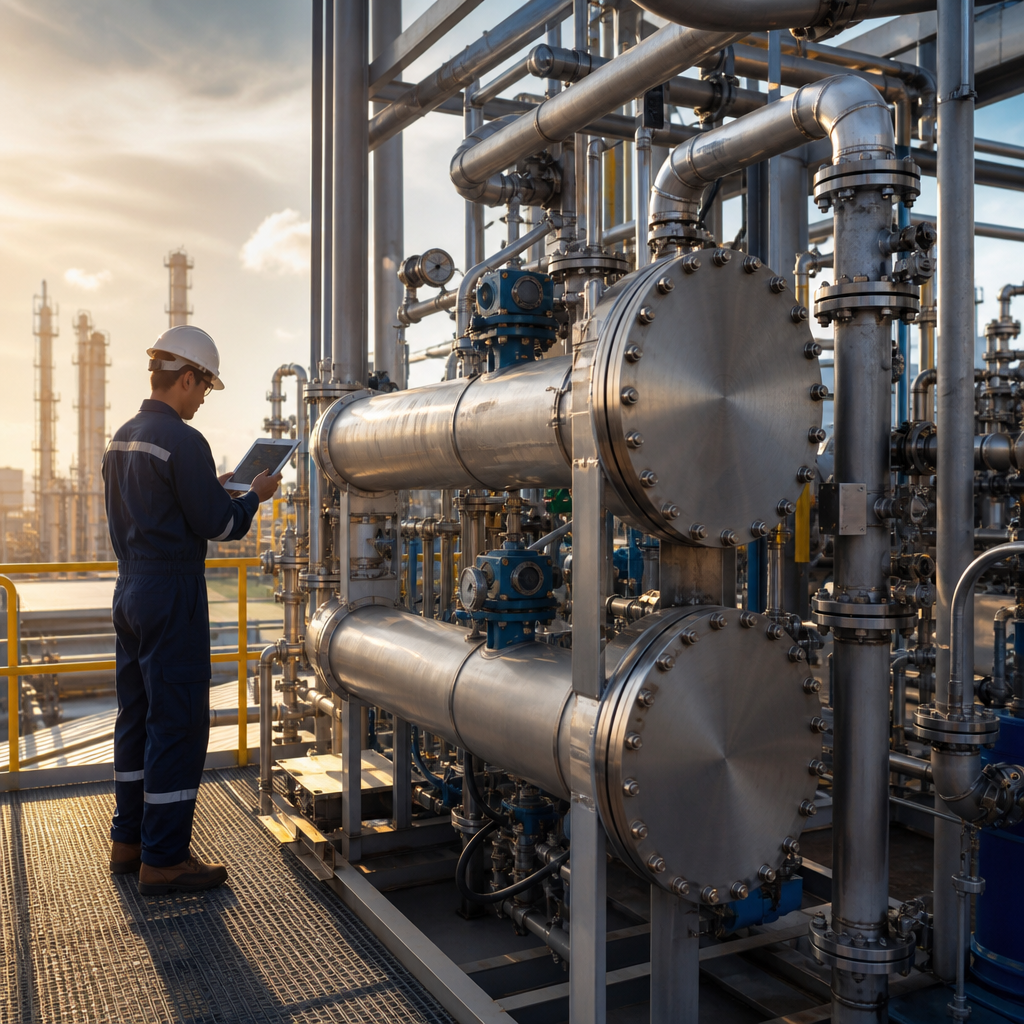
The Role of Heat Exchange in Process-Driven Industries
Industrial facilities that rely on continuous thermal processes — refineries, chemical plants, power generation stations, and food processing units — share one fundamental requirement: the ability to transfer heat efficiently, safely, and reliably. Without robust heat exchange infrastructure, even the most sophisticated process systems become vulnerable to thermal inefficiency, equipment degradation, and unplanned downtime. The engineering decisions made around heat transfer equipment are not peripheral — they sit at the core of operational performance and long-term cost management.
Among the many technologies available to process engineers, one configuration has remained dominant across decades of industrial evolution. Its longevity is not accidental. It reflects a design philosophy that balances mechanical simplicity with exceptional thermal performance, making it adaptable to an enormous range of operating conditions and fluid types.
Understanding the Core Design Principles
The fundamental operating principle behind shell-and-tube heat exchange technology involves two fluid streams — one flowing through a bundle of tubes, the other flowing around those tubes within an outer cylindrical shell. Heat transfers through the tube walls from the hotter fluid to the cooler one, without the two streams ever making direct contact. This separation is critical in applications where cross-contamination would compromise product quality or create safety hazards.
The geometry of the tube bundle, the spacing of baffles within the shell, and the selection of materials all influence how effectively heat transfers between the two streams. Engineers adjust these variables to meet specific process targets — whether that means maximizing heat recovery, managing high-pressure differentials, or handling corrosive or viscous fluids that would challenge simpler heat transfer designs.
Why This Configuration Outperforms Alternatives in Heavy-Duty Applications
Plate heat exchangers and air-cooled systems each have their place in industrial settings, but they carry limitations that become significant under demanding conditions. High-pressure service, elevated temperatures, and aggressive chemical environments often exceed the structural tolerances of plate designs. Shell-and-tube configurations, by contrast, can be engineered to withstand pressures exceeding several hundred bar and temperatures that would compromise gasket-sealed alternatives.
This robustness makes the shell-and-tube format the preferred choice in upstream oil and gas operations, petrochemical refining, and steam generation systems where thermal loads are intense and reliability is non-negotiable. The ability to clean tube-side surfaces mechanically — without full disassembly — also gives maintenance teams a practical advantage in facilities where scheduled downtime must be minimized.
Integration With Fuel Systems and Engine Infrastructure
Heat exchangers do not operate in isolation. In many industrial and marine environments, they form part of a broader thermal management network that includes fuel conditioning systems, lubrication cooling circuits, and engine cooling loops. The reliability of these interconnected systems depends on each component performing within its design parameters consistently over time.
When sourcing components for these integrated systems, procurement teams must consider not only the heat exchanger itself but also the surrounding infrastructure that supports it. Ensuring fuel system reliability and proper engine parts sourcing is equally critical to maintaining the thermal balance that shell-and-tube units are designed to sustain. A failure upstream in the fuel or lubrication circuit can impose thermal loads on the heat exchanger that exceed its rated capacity, accelerating wear and shortening service life.
Thermal Load Matching and System Compatibility
One of the most common engineering errors in heat exchanger deployment is mismatching the unit’s thermal capacity to the actual process load. Oversized exchangers can cause fluid velocity to drop below the threshold needed to prevent fouling, while undersized units struggle to achieve target outlet temperatures under peak demand. Accurate load calculations, combined with a clear understanding of how the exchanger interacts with adjacent systems, are prerequisites for a successful installation.
Process engineers increasingly use simulation tools to model heat exchanger behavior across a range of operating scenarios before committing to a final design. This approach reduces the risk of costly retrofits and helps identify potential fouling risks, pressure drop issues, or vibration concerns that might not be apparent from static calculations alone.
Steam Systems and the Broader Thermal Control Environment
In facilities where steam plays a central role in process heating, the heat exchanger often serves as the interface between the steam distribution network and the process fluid being heated. Understanding how steam pressure, temperature, and flow rate interact with the exchanger’s design parameters is essential for maintaining stable process conditions. For engineers seeking a deeper understanding of steam system controls and supervision, this overview of steam boiler controls, testing, and supervision from IChemE provides valuable technical context that complements heat exchanger engineering knowledge.
Steam-heated shell-and-tube units must be designed with condensate management in mind. Improper condensate drainage can lead to water hammer events that damage tube bundles and shell internals, creating maintenance challenges that could have been avoided with proper system design from the outset.
International Process Plants: A Trusted Resource for Heat Exchanger Knowledge
For process engineers, plant operators, and procurement specialists navigating the complexities of heat transfer equipment selection, access to clear, technically grounded information is invaluable. International Process Plants has developed a comprehensive resource that addresses the practical questions surrounding this widely used technology. Understanding the design, operation, and maintenance considerations of a shell and tube exchanger is essential for anyone responsible for specifying or managing this equipment in a process environment. Their user-focused guide covers the key design variants, material selection considerations, and operational best practices that inform sound engineering decisions.
The depth of knowledge available through International Process Plants reflects their extensive experience in the process equipment sector. Their resources are particularly useful for teams evaluating used or refurbished equipment, where understanding original design specifications and service history is critical to assessing suitability for a new application.
Maintenance Strategies That Extend Service Life
Fouling remains the most persistent challenge in shell-and-tube heat exchanger operation. Scale deposits, biological growth, corrosion products, and process residues accumulate on heat transfer surfaces over time, reducing thermal efficiency and increasing pressure drop across the unit. A proactive maintenance strategy — combining regular inspection, chemical cleaning, and mechanical tube cleaning where appropriate — can significantly extend the interval between major overhauls.
Eddy current testing and ultrasonic thickness measurement are among the non-destructive evaluation techniques used to assess tube condition without requiring full bundle removal. These methods allow maintenance teams to identify thinning, pitting, or cracking at an early stage, enabling targeted repairs rather than wholesale tube bundle replacement.
Conclusion: Engineering Decisions That Define Operational Outcomes
The shell-and-tube heat exchanger’s enduring presence in industrial process plants is a testament to its engineering versatility and operational reliability. From crude oil preheat trains to pharmaceutical process cooling circuits, this technology continues to deliver performance that more complex alternatives struggle to match under demanding conditions. Making informed decisions about design selection, system integration, maintenance scheduling, and component sourcing is what separates facilities that operate at peak efficiency from those that face recurring thermal management challenges. The investment in understanding this equipment thoroughly — from first principles to practical maintenance — pays dividends across the entire operational lifecycle of the plant.
